.png)

From Pliés to Pirouettes: Ballet for Kids, Stage by Stage
- DPA KEC
- Apr 15
- 4 min read

Updated: 2 days ago

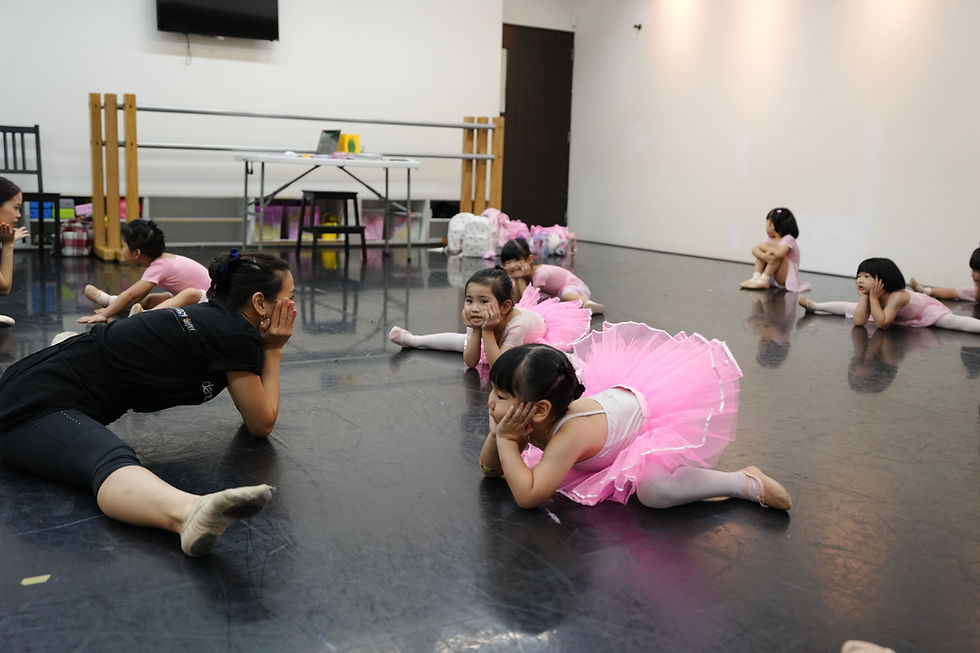
There’s a particular kind of pride in watching a small child walk into their first pre-primary ballet class. The leotard is brand new. The eyes are wide. And the feet, bless them, are not quite sure what a pointed toe is yet. Fast forward a few years, and that same child is moving with poise, holding a balance, and understanding their body in ways that surprise even their parents.
Many parents enrol their children in ballet, knowing they will love it. What fewer parents have is a clear picture of what the journey actually looks like, year by year. The progression from pre-primary through to the upper RAD grades is structured, purposeful, and rewarding at every level. Knowing what each stage involves helps parents understand not only what their child is learning but also why the sequence matters.
Pre-Primary: Where Every Journey Begins (Ages 3 to 4)
Pre-primary ballet is not a junior version of a grown-up class. It’s something entirely its own. Sessions are short, playful, and built around imagination rather than instruction. A three-year-old does not learn through correction and repetition the way an older child does. They learn by pretending to be a butterfly, by tiptoeing like a mouse, by discovering that their body can be light or heavy, fast or slow.
Underneath all that play, something more structured is quietly happening. The groundwork for body awareness, spatial understanding, and listening skills is being laid at this stage. Children learn to point a foot, hold a position, and move with intention rather than just with energy. These physical foundations are what everything else gets built on, and starting ballet early, before formal technique begins, makes a real difference to how a child develops later.
Primary: Building the Basics (Ages 4 to 6)
Primary classes are where ballet starts to take more recognisable shape. Children move beyond pure imagination into named steps and structured patterns. The work is still done in the centre of the studio rather than at the barre, but the vocabulary begins to feel formal.
Pliés, tendus, and simple arm movements are not complicated steps. But they are the grammar of ballet for children, and getting them right at this age, building good habits before bad ones take hold, sets the tone for years of progress. Children also begin to develop musicality here, learning to move in time with a pianist or recorded music rather than just their own internal rhythm.
At this point, parents often notice something else: their child starts carrying themselves differently. Better posture. A little more stillness. A quietly growing confidence. It tends to show up outside the studio long before anyone mentions it inside.
Grades 1 and 2: Where Technique Takes Shape (Ages 6 to 8)
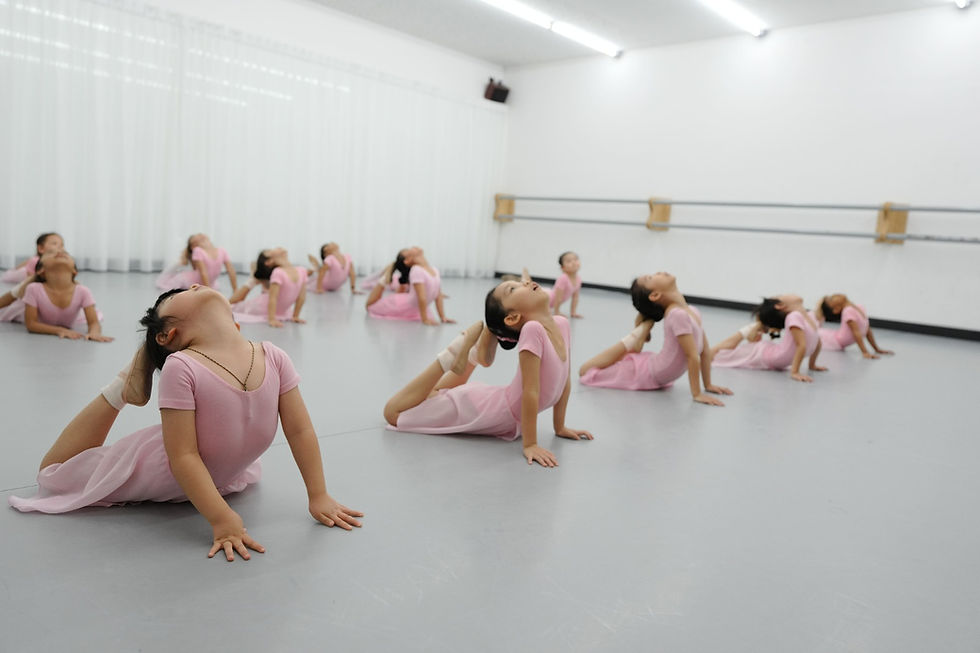
This is where ballet for kids starts to look more like what most people picture the art form to be. Centre practice deepens, travelling steps come into play, and the work becomes more visibly structured. Ballet RAD Grade 1 introduces the Royal Academy of Dance syllabus, giving each element of technique a name, a shape, and a standard to work toward.
Grade 2 marks another milestone: the barre. This is the first time many young dancers work with a physical reference point for alignment and balance, and it changes how they approach every step. Turn work also begins to appear at this stage, introduced gradually as the foundations for the pirouettes that come in later years.
New skills emerge alongside these changes: relevés with greater control, simple arabesques, coordinated arm-and-leg movements, and the beginnings of jump work. The classroom relationship shifts too. Children begin to internalise corrections rather than simply reacting to them, and they start to feel real satisfaction when a difficult step finally clicks.
One practical note for parents: this is the stage where regular attendance starts to matter more. The skills being built are cumulative. Each class connects to the previous one, and attendance gaps become more visible than in earlier years.
Grades 3 and 4: Growing Confidence and Complexity (Ages 8 to 10)
By Grades 3 and 4, the work has noticeably stepped up. Centre combinations become more demanding, and allegro requires a dancer to manage multiple technical points at once. The turn work introduced earlier in Grade 2 develops into more controlled rotations, pointing toward the pirouettes that come into focus from Grade 5 onward. Children at this age tend to be ready for it.
Alongside the technical growth, something harder to teach directly also develops: artistic identity. Children at this stage begin to form a real sense of how they move, what they love about being in the studio, and who they are becoming as dancers. It’s one of the more rewarding things to observe as a parent.
At this level, the RAD graded examinations are a significant milestone. Approached well, they give a child's progress formal recognition and a genuine benchmark, without the experience feeling pressured or high-stakes.

Why Every Stage Is Worth Showing Up For
The skills built at each level are cumulative. A child who moves patiently through pre-primary ballet and primary arrives at Grade 3 with a body and mindset properly prepared for what comes next.
Not every child will continue ballet beyond childhood, and that is entirely fine. The discipline, focus, resilience, and confidence built along the way don’t stay in the studio. They travel with a child into school, friendships, and every other area of life.
As a dance academy established in Singapore since 2005, we structure our kids' ballet classes to support a child at every point along this journey, from their very first pre-primary class through to RAD examinations and beyond. Full-time certified teachers work with students at all levels and know each student personally.
Start the Journey Today
The journey from pliés to pirouettes is not a race. The most important thing at every stage is that a child feels supported, seen, and genuinely happy in the room.
Every stage of your child's ballet journey starts with a single class. Find your nearest Dancepointe outlet and book a trial at our ballet school in Singapore today.