.png)

Ballet Stretches to Improve Your Child's Flexibility at Home

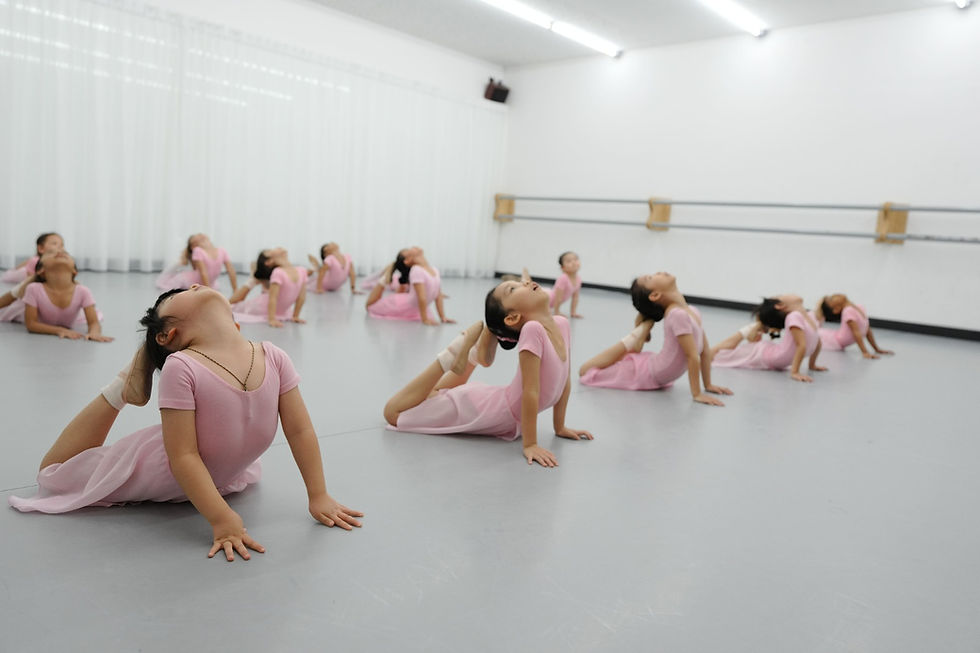
Have you ever watched a ballet performance and marvelled at the way a dancer lifts their leg, or melts into a split as though gravity doesn't apply to them? It's one of the most breathtaking sights in the performing arts, and if your child is taking a ballet dance class, chances are you've already found yourself wondering: how do I help my child get there?
Flexibility is, without a doubt, one of the components of ballet technique. Those stunning extensions and high legs that captivate audiences don't happen by accident. They're the result of patient, consistent practice over time. Pushing too hard or too fast doesn't speed things up; it risks injury, and in young, still-developing bodies, we want to avoid that.
The good news is that there's plenty parents can do at home to complement what their child is learning in ballet classes, building flexibility between sessions. Incorporating the right ballet stretches for kids between sessions can go a long way in building flexibility steadily and safely. This guide is here to help you do exactly that.
The Rules of Safe Stretching
Before diving into the specific movements, it’s vital to remember that how your child stretches matters just as much as what they stretch. Preparing the body correctly ensures that the muscles are receptive to change and protected from strain.
Dynamic stretching should always come first. Think of your child's muscles like a cold elastic band. Stretch it straight out of the fridge, and it snaps; warm it up first, and it moves with ease. To get the blood flowing and safely increase the heart rate, encourage your child to start with a few minutes of active movement. Exercises such as light jogging, jumping jacks, or brisk marching are excellent ways to prime the body. You could even turn on some music and have them dance freely around the room for five minutes.
Once the heart rate is up and the limbs feel warm, you can transition into static stretching. These are the traditional ballet stretches, where you hold a position for around 30 seconds to build lasting flexibility in the muscle fibres. These stretches for ballet dancers are most effective at the end of a session, when the body is most pliable.
A stretch should feel like a gentle pull in the muscle, never sharp or unbearable. If your child winces or pulls away, ease off immediately. Parents shouldn't press down on a child's body to deepen a stretch, as forced stretching can cause real harm to young joints and muscles.
Short daily sessions of 10 to 15 minutes are far more effective than one long, ambitious session on the weekend. Flexibility is built through consistency, not intensity.
Targeted Stretches for Young Dancers
Once your child has warmed up, here are some of the most beneficial ballet flexibility stretches to incorporate into their home routine, focusing on the key muscle groups used most in ballet technique.
1. The Butterfly Stretch
Have your child sit on the floor and bring the soles of their feet together, letting their knees fall gently out to the sides. Encourage them to sit tall with a long spine and hold for 30 seconds. This is one of the most important ballet hip stretches in a young dancer's repertoire, targeting the inner thighs and groin muscles essential for developing turnout.
2. The Standing Quad Stretch
Ask your child to stand tall near a wall for balance, bend one knee and bring the foot up behind them towards their bottom, holding the ankle gently. Encourage them to keep their knees together and stand up straight. Hold for 30 seconds on each side. This targets the front of the thigh, making it one of the most valuable ballet stretches for kids as they begin to work on their leg lines.
3. The Long Sit Hamstring Stretch (Pike)
Have your child sit on the floor with both legs stretched out straight in front of them, feet gently flexed. Ask them to sit as tall as they can, then slowly hinge forward from the hips, reaching towards their feet. The key is to keep the back straight rather than rounded, as a slouching spine reduces effectiveness and can strain the lower back. Hold for 30 seconds. This targets the hamstrings, which play a central role in achieving beautiful high extensions.
4. The Hip Flexor Stretch (Kneeling Lunge)
Ask your child to kneel on one knee with the other foot planted flat on the floor in front, like a mini lunge. Encourage them to gently shift their weight forward until they feel a stretch at the front of the hip, keeping their upper body tall and hips square. Hold for 30 seconds on each side. Tight hip flexors are among the most common leg-height limiters, making them one of the most important yet often overlooked ballet stretches for flexibility.
Incorporating Flexibility Into Daily Life
Flexibility training doesn't have to feel like extra work. With a little creativity, it fits seamlessly into moments that are already part of your family's day.
Turn screen time into stretch time: The next time your child settles in for their favourite show, invite them to sit in butterfly position or hold a gentle pike stretch on the floor beside you. They'll barely notice the effort when their attention is elsewhere, and those minutes add up over the week.
Use what you already have at home: A small folded towel or a resistance band looped around the feet can help deepen a hamstring stretch safely, without any strain.
Stretch after a warm bath or shower: Muscles are naturally more pliable when the body is warm. A short 10-minute stretching routine after bathtime can be significantly more productive than the same routine done in the middle of the day, and it fits neatly into the wind-down routine before bed.

The Importance of Professional Guidance
While home stretches are a meaningful part of your child's ballet journey, they work best as a complement to professional training. At a reputable dance academy in Singapore, flexibility isn't developed in isolation. Our certified teachers at Dancepointe Academy ensure that flexibility is always built alongside strength, correct posture, and body awareness. Without this balance, a child may become flexible but lack the muscular control to use it safely and beautifully in their dancing.
If your child ever experiences pain during stretching or if you feel their progress has plateaued, always bring it to their teacher's attention. Our teachers are partners in your child's development and welcome open communication at every step.
Every Great Dancer Starts With a Single Stretch
Flexibility in ballet is a journey that unfolds gradually, with patience, consistency, and plenty of encouragement. Celebrate every small step forward, from the first time their knees touch the floor in a butterfly, to the first time they reach their toes in a pike. These moments build not just flexibility, but confidence, resilience, and a genuine love for dance that lasts a lifetime.
If you'd like your child to experience structured, expert-guided training that makes all of this possible, feel free to explore our children's ballet classes and book a free trial class today.


