.png)

How Early Ballet Training Benefits Other Activities
- DPA KEC
- Sep 15, 2025
- 4 min read

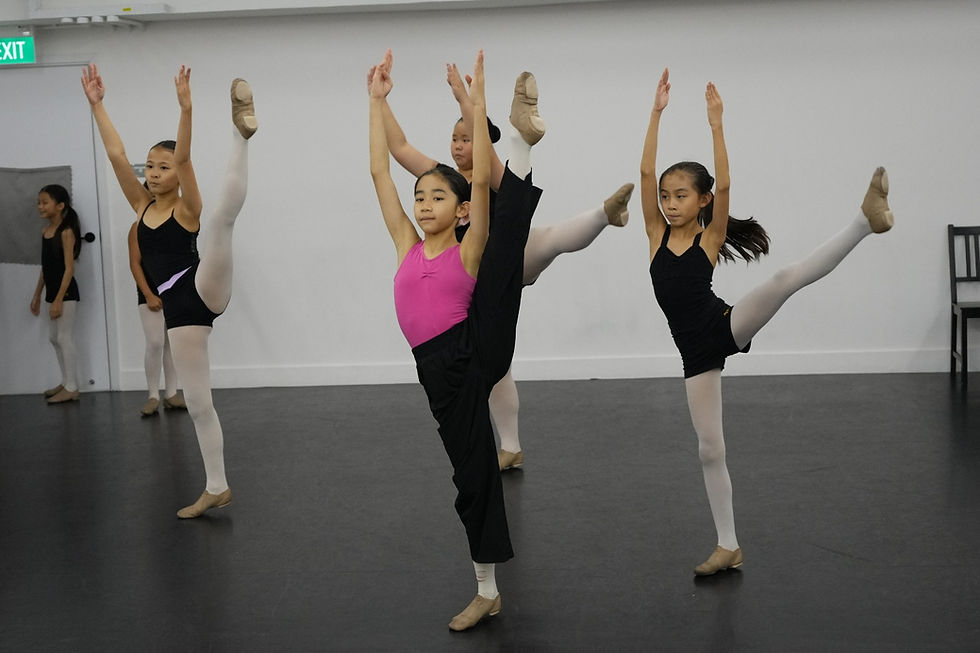
Ballet’s physical and mental benefits are widely known, but did you know that many of the skills learned in a ballet class are also highly transferable? From professional athletes to business leaders, many individuals credit their early ballet training as a foundation for their success. Let’s explore how dance lessons can be a crucial stepping-stone for a child’s development.
Builds a Strong Physical Blueprint
Early ballet training is essentially a blueprint to build a strong and versatile body. It systematically develops fundamental physical skills that are useful for any activity your child pursues. For instance:
Core Strength and Stability: Ballet exercises can help build strong core muscles, which are essential for balance and stability in various physical activities. The focus on engaging the core for control helps children to develop a deeper understanding of their centre of gravity. This core stability provides the power and control needed for everything from swinging a golf club to changing direction on a football field.
Coordination and Motor Skills: The intricate movements in ballet can also improve a child’s fine and gross motor skills, leading to better coordination in other sports. The continuous need to coordinate different parts of the body, such as the arms, legs, head, and torso, in unison refines a child’s neuromuscular connections. This improved body awareness and control translates to better footwork for running, agility for martial arts, and hand-eye coordination for sports like basketball.
Balance and Spatial Awareness: Constant balance work, such as standing on their toes (relevé) or turning (pirouette), can improve a child’s spatial awareness and ability to control their body in space. This is a fundamental skill that gymnasts rely on for their routines and martial artists need for precise movements. This heightened proprioception, or the body’s awareness of its position in space, also helps reduce the risk of falls and injuries in daily life.
Flexibility and Agility: Ballet’s stretches and movements build flexibility, which is vital for a full range of motion. This enhanced flexibility, often developed through ballet’s flexibility training, not only improves performance but also helps to reduce the risk of injury in other sports, making a child more agile and less prone to muscle strains.
Cultivates Mental and Emotional Fortitude
Aside from the physical benefits, ballet training can help cultivate mental and emotional fortitude that prepares your child for success in any field. This includes:
Discipline and Concentration: The structured environment of ballet classes instills discipline, concentration, and the ability to follow complex instructions. This mental focus is a skill that directly benefits academics, allowing children to concentrate better in school and manage multiple tasks. Similarly, in team sports, the ability to listen attentively to a coach's instructions and execute a play with precision is a direct transfer of the skills learned in the ballet studio.
Resilience and Perseverance: Mastering challenging ballet steps teaches children the value of consistent effort and resilience in the face of difficulty. When a dancer falls out of a turn or struggles with a jump, they learn to get back up and try again. This repeated experience of overcoming obstacles builds a powerful sense of perseverance that is useful in all areas of life, from studying for a challenging exam to recovering from a career setback.
Confidence and Poise: Achieving ballet milestones and performing also builds self-esteem and presence that translates into other areas of life. A child who learns to perform confidently on stage in a ballet recital gains the poise and self-assurance to present a project in front of a class or speak with conviction in a meeting.
Musicality and Timing: Ultimately, connecting movement to music in ballet fosters a refined sense of rhythm and timing. This can be advantageous in sports that rely on time, such as tennis or swimming, and is a foundational skill for those who wish to learn to play a musical instrument or even become a confident public speaker.
Transferable Skills in Action
So, is ballet a sport? Well, it’s undeniable that ballet offers the athletic foundation for various sports. In fact, some professional athletes may incorporate ballet training into their cross-training regimen to gain an edge. Here are a few examples of activities where ballet skills can be helpful:
Gymnastics
Football/basketball
Swimming
Martial arts
Beyond sports, the discipline, focus, and memory required to learn choreography also support a child's academic performance. The grace under pressure, teamwork, and self-expression gained from ballet training are valuable life skills that prepare children for success in any profession.

Start Strong at Dancepointe Academy
At Dancepointe Academy, our lessons are designed to provide this foundation. Starting with our kids' ballet class for children as young as three years old, we focus on these foundational skills through fun, engaging, and age-appropriate exercises that build a strong base for future endeavours.
Our certified teachers are experts at guiding students to develop not only correct technique but also healthy habits that support all physical activities. We aim to nurture well-rounded individuals, equipping them with versatile skills for life and fostering a lifelong love of movement.
Invest in Your Child's Versatility
Early ballet training is a powerful investment that extends beyond the dance studio. It equips children with a comprehensive set of physical, mental, and emotional skills that can boost their success and enjoyment in any activity they choose to pursue.
Consider ballet not just as an extracurricular activity, but as a foundational stepping-stone for your child's diverse interests. The skills learned, from strength training for ballet to the grace of a pirouette, will serve them well throughout their lives, helping them stand taller and move with confidence in whatever path they choose.


